
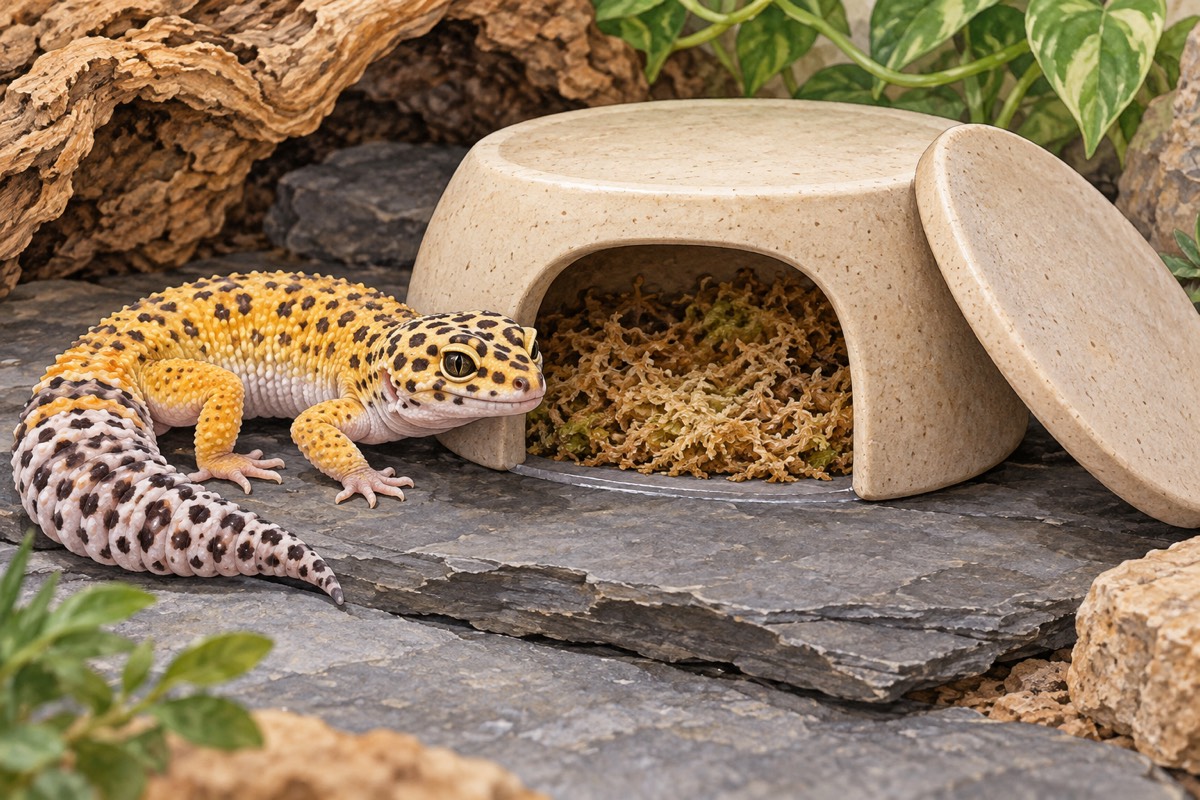
The part of a humid hide that matters most is hidden under the lid. From outside, a tidy little cave can look ready to use while the lining has dried out, become fouled, or collected water underneath. When checking a setup, I would lift the lid while the gecko is elsewhere, look at the base, and check the material before adding another spray of water.
A leopard gecko needs access to a humid retreat as well as dry hiding places. The aim is to offer a sheltered pocket of moisture that the animal can enter and leave. This guide focuses on that small part of the enclosure: choosing the container, placing it, keeping the lining usable, and spotting problems that need more than a change of moss.
Choose a hide you can inspect without dismantling the enclosure
Look for an opaque hide with a waterproof base and a removable lid. The gecko should be able to fit its whole body and tail inside and turn or settle comfortably. Check the entrance at floor level: it should be easy to step through, with smooth edges and no narrow gaps that could trap a foot. A low, stable hide is easier to enter and less likely to shift when the gecko pushes against it.
A purpose-made ceramic or plastic humid hide can work. If using a plastic tub, finish every cut edge smoothly and check that the lid closes securely without pinching. Choose a container that tolerates repeated washing. A decorative cave with an inaccessible interior may be difficult to inspect thoroughly; a lift-off lid lets you see soiling and replace the lining without chasing the animal out through its doorway.
Before putting it in the vivarium, run a finger around the opening, check the underside for sharp points, and set it on a flat surface. Press gently on the corners to see whether it rocks. Keep this first check simple: stability, access, space, and a base that will contain moisture.
Use a damp lining, with no standing water
Clean sphagnum moss sold for reptile use is a commonly recommended lining. Moisten it with clean water, then remove excess water before spreading a shallow, loose layer in the base. The doorway must remain clear. The gecko needs room to rest on the material, rather than having to burrow through a tightly packed box.
As a practical check, lift a small portion of lining and look beneath it. Material that feels dry throughout needs moisture; a puddle at the bottom means there is too much. Add water to the lining gradually, away from the gecko, and recheck the base. Dampness should remain inside the hide rather than soaking the floor around it. Avoid scented moss, fertilised garden material, and anything collected outdoors with unknown contamination.
Plain paper towel is an alternative discussed in veterinary guidance on shedding problems. It makes waste easy to see, although it can dry quickly and needs replacement when soiled or breaking down. Whichever lining you choose, watch whether the gecko mouths or swallows it. If it does, ask a reptile veterinarian about a safer arrangement for that individual instead of simply adding more material.
Place it where warmth and moisture can work together
Provide dry shelters at both warmer and cooler parts of the enclosure, then add the humid hide as an additional choice. Veterinary care guidance commonly places the moist retreat toward the warm side. Position it within the established temperature gradient, away from direct contact with a heater or any surface that could overheat. Keep heating equipment controlled by an appropriate thermostat and check temperatures with suitable instruments.
Do not remove the cool dry hide to make space, or assume a gecko using its humid hide no longer needs other shelters. A useful placement check is whether the animal can move between retreats without an awkward climb or an exposed obstacle course. Keep the entrance unobstructed by bowls and furnishings. Check the temperature at the new position rather than guessing from how close it sits to the heat source.
The RSPCA describes a relatively dry overall environment, with humidity around 30–40 percent measured at the cool end, alongside a local humid hide. A higher reading inside the retreat is expected. Do not try to make the whole vivarium match the hide by repeatedly wetting every surface. If the surrounding enclosure remains damp or condensation persists, review ventilation and water use as well as the hide itself.
Check the lining daily; replace it when its condition changes
Take a quick look each day when the gecko is out of the retreat. Check moisture, droppings, urates, leftover insects, and any unusual smell or growth. Remove animal waste promptly. If waste has contacted the lining, discard the affected material and clean the container rather than spraying over it. Moisture does not make dirty material usable again.
There is no single replacement interval that fits every container and room. A ventilated box near warmth may dry sooner; a more enclosed design can stay wet much longer. Use the first week to note how quickly yours changes. Check again after altering heating, ventilation, or lining depth. A brief note such as “dry at evening check” or “wet under moss” is enough to guide the next adjustment.
Replace lining that is mouldy, foul-smelling, heavily soiled, or deteriorating. If mould returns quickly, inspect the container for trapped debris and persistent water, and reconsider how much material and water you use. Do not rely on a cleaning calendar to justify leaving visibly contaminated material in place.
Clean the container, then rebuild the retreat
Wait until the gecko is using another shelter if possible. If it must be moved for cleaning, place it in a secure, ventilated temporary container with appropriate warmth; support its body and never pull it by the tail. Remove and discard used lining, then wash away visible waste and residue with tools reserved for reptile care.
Use a reptile-safe disinfectant according to its label, including dilution, contact time, and any rinsing instructions. Do not mix cleaning products or improvise a stronger solution. Rinse as required and let the container dry completely before adding fresh damp lining. Recheck the doorway and lid for damage before returning it to its stable position.
Keep reptile cleaning equipment away from food-preparation areas and wash your hands afterward. A spare clean hide can make the change easier, especially when one container needs time to dry. Prepare its lining first so the enclosure is not left without a humid retreat while cleaning takes place.
Watch the shed without pulling at it
A duller-looking coat can precede shedding, and leopard geckos often eat the shed skin. You may never find a complete skin in the enclosure. When the animal is moving normally after shedding, look at its toes, tail tip, and around its eyes without restraining it just to inspect every scale.
Skin remaining around toes or eyes deserves advice from a reptile veterinarian. Tight retained skin can damage toes, and pulling can injure the new skin beneath. Do not use tweezers, oils, or repeated forced baths as a substitute for assessment. Eye closure, swelling, wounds, loss of appetite, or unusual lethargy are further reasons to contact the vet promptly.
If shedding repeatedly goes wrong, bring photographs of the enclosure and a record of temperatures, humidity, feeding, and supplements to the appointment. A humid hide supports normal husbandry, but persistent shedding trouble can involve the wider environment or health. Adjust the setup with the vet’s advice rather than making it wetter each time.
Sources and further reading
- RSPCA: Caring for a leopard gecko
- RSPCA: Places for reptiles to hide
- VCA Animal Hospitals: Leopard geckos—care and feeding
- PetMD: Leopard gecko care sheet
- PetMD: Dysecdysis in reptiles
Editorial note: The illustrations on this page were generated for DailyTrail to show the setups described. They are not photographs of the author’s animals. This article provides general husbandry information and does not replace advice from a veterinarian familiar with reptiles.