
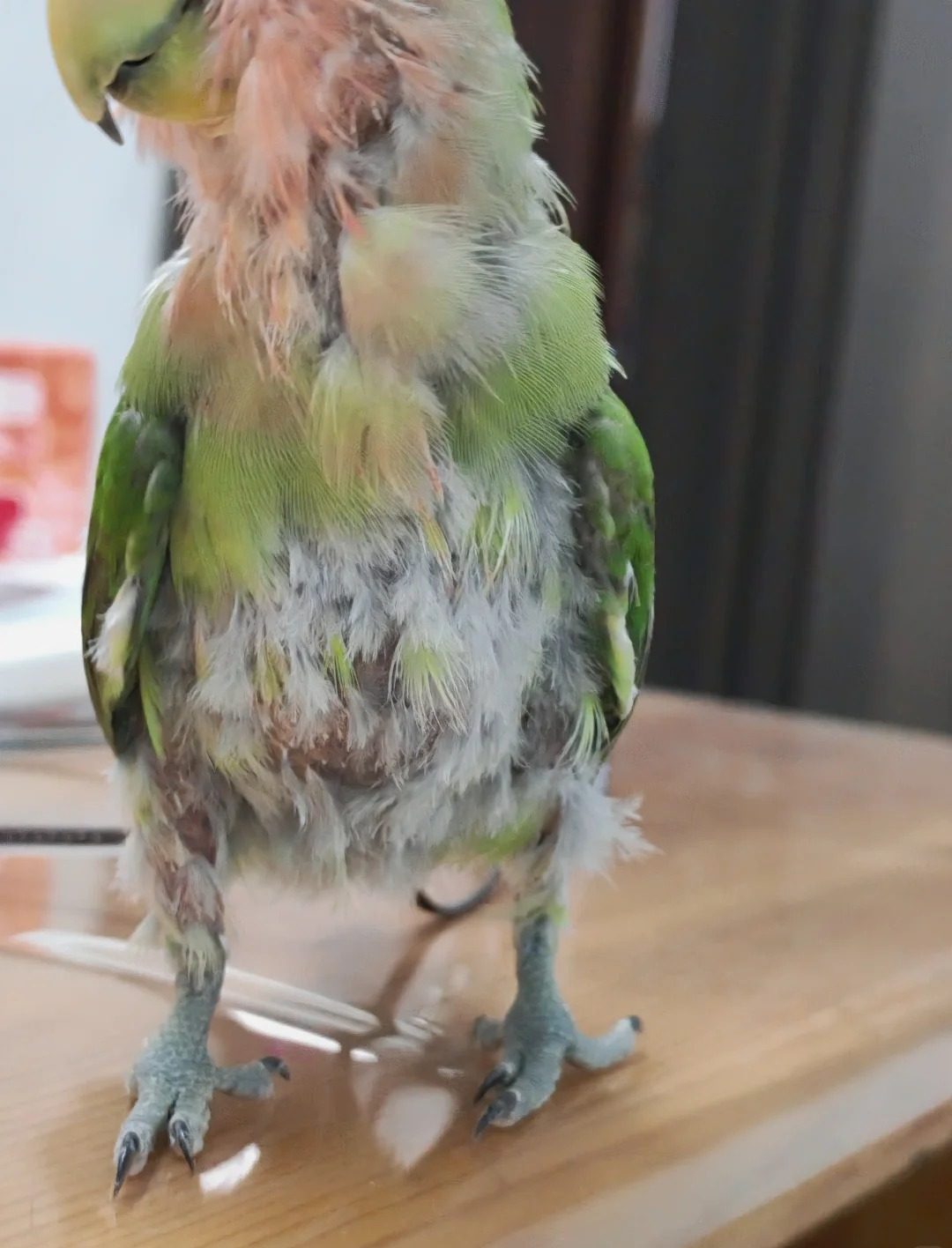
First time I got a parrot, I saw feathers floating around the cage and thought — eh, they shed, just like dogs, right?
Then his feathers started looking dull. Some patches even went bare. I figured it was just molting, no big deal. Until the vet looked at me and said: “You know feathers are a direct reflection of overall health, right? The way he looks right now? That is not a bird doing well.”
That was when I started actually paying attention. A parrot’s feathers are not decoration. They are survival tools. A bird that cannot fly does not last in the wild. And when feathers go wrong, it is usually the first sign that something else is going wrong.
Here is what I learned, and what I now do every week.
Feathers Are Not Just “Fluff”
Feathers do a lot — flight, insulation, waterproofing, social signaling, camouflage. Parrots spend hours preening, lining up each feather, removing dust and parasites, and applying oil from their uropygial gland.
That uropygial gland sits at the base of the tail. The bird rubs their beak against it, then works that oil through their feathers. It keeps the feathers flexible, waterproof, and helps stop bacteria from growing.
If that gland gets blocked, infected, or stops working, feather quality drops fast.
Feather condition is one of the most direct signs of overall health. A bird with sleek, shiny feathers is usually a bird that is doing okay.
Daily Grooming — They Do It Themselves, but You Set It Up
Parrots groom themselves — they spend hours on it every day. You do not need to brush them like a cat or dog. But you do need to give them the right conditions.
Offer regular misting or bathing opportunities. In the wild, parrots get rained on and roll around in dew on leaves. Indoors, a fine water mist is the substitute.
Use a clean spray bottle with a fine mist setting. Not a jet of water — a mist. Spray above the bird so it falls down like rain. Do not spray directly at their face.
Timing matters: do this in a warm environment. Avoid misting in the evening or on cold days — wet birds get cold fast.
Bathing Styles — Three Options, Depends on the Bird
Not every parrot likes the same bath. Some prefer misting. Some like a bowl. Some want to come into the shower with you.
Option one: mist bath
- Most common, gentlest approach
- Fine mist from above, like light rain
- Two to three times a week, more often in dry weather
Option two: bowl bath
- Put a shallow dish or bath pan in the cage
- The bird jumps in and splashes around on their own
- Wash the dish after every use — keep it clean
Option three: shower with you
- Some parrots love coming into the bathroom and sitting on a perch while water mist hits them
- Keep water pressure low and temperature lukewarm — not hot
- Do not let water hit them directly in the face
Watch your bird — they will tell you what they like.
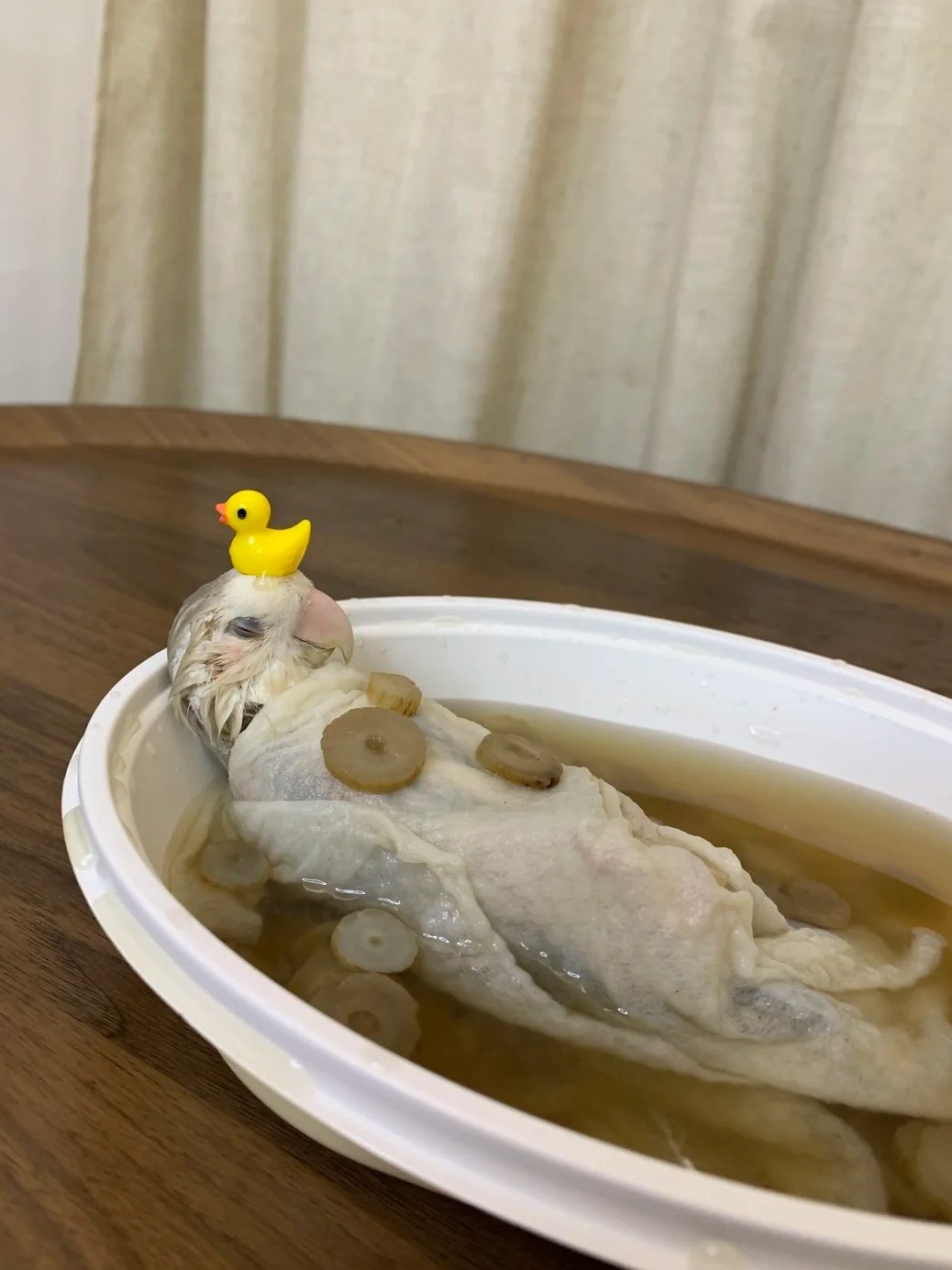
Molting — That Is Just How Feathers Renew
Molting is when parrots drop old feathers and grow new ones. Happens once or twice a year. Not a sickness.
During a molt:
- You will see pin feathers — those little tubes that look like tiny straws before the feather unfurls
- Your bird might be quieter or more irritable — growing new feathers takes energy and can be uncomfortable
- They need extra nutrition — protein and calcium are essential for feather growth
- Misting more often can help soften the feather sheaths and relieve dry skin
Do not: try to “help” by peeling open the feather sheaths. They handle that themselves. Forcing it can damage blood feathers and cause bleeding.
Nutrition — Feathers Are Made from What They Eat
Feathers are mostly keratin — a protein. Without good protein in the diet, feathers come out weak, dull, and misshapen.
Key nutrients for feather health:
- Protein — from pellets, beans, hard-boiled eggs
- Vitamin A — from carrots, bell peppers, leafy greens
- Omega-3 and Omega-6 — from small amounts of nuts and seeds
- Calcium and zinc — from crushed eggshells, cuttlebone, pellets
If a parrot is low on vitamin A for a long time, feathers dry out, break easily, and lose color. Molting is especially demanding — new feathers need a lot of nutrients.
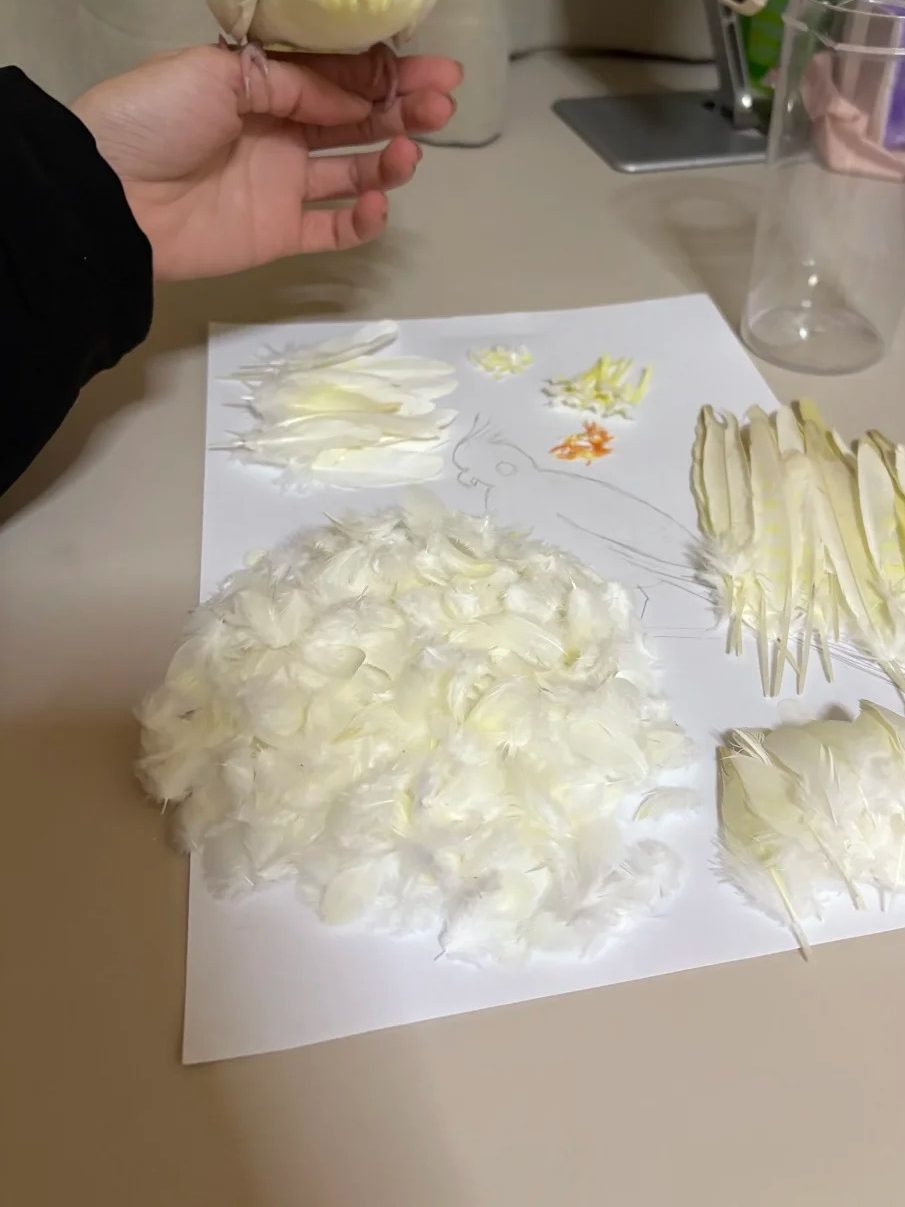
Humidity — Dry Air Is the Enemy of Feathers
Indoor heating and air conditioning dry out the air.
Dry air pulls moisture from your parrot’s skin and feathers. Feathers become brittle, break more easily, and do not preen as well.
What helps:
- Keep a hygrometer near the bird area — aim for 40 to 60 percent humidity
- Use a humidifier or mist regularly
- Do not put the cage directly under an AC vent or above a heater
Feather Plucking — A Signal, Not the Problem
If your parrot starts pulling out their own feathers — take it seriously.
There are many reasons, but they all point to something being off:
- Stress — changes in environment, loud noises, boredom
- Skin conditions — infections, mites, allergies
- Nutritional gaps — especially low vitamin A or protein
- Behavioral issues — not enough mental stimulation, repetitive habits
If you see feather plucking:
- Step one: see a vet to rule out medical causes
- Step two: check the environment — cage big enough? Enough toys?
- Step three: check the routine — enough sleep? Regular interaction?
- Step four: check the diet — too many seeds? Enough fresh vegetables?
Plucking is a symptom, not the root problem. Find the root, fix the symptom.
Weekly Check — Quick Feather Inspection
Take two minutes once a week to look over their feathers:
What to check:
- Overall appearance — feathers lying flat? Any obvious breaks?
- Any bare patches — especially on the chest, belly, and under the wings
- Pin feather buildup — lots of sheaths not opening?
- Flight and tail feathers — are they complete? Any asymmetry or damage?
- Feather color — normal shine? Or looking faded?
If you see a single blood feather — one that came out with a bit of blood at the base — that can happen from normal activity. Just watch it. If it keeps happening, ask the vet.
Final Thoughts
Feather care comes down to three things: give them chances to bathe, give them the right nutrition, and keep the air from getting too dry.
Everything else? Parrots handle it themselves. They are great at keeping themselves in shape — as long as you give them what they need to do it.
Every time I see a parrot sitting on a perch, stretching a wing, with sunlight catching those feathers just right — it hits me all over again. Good feathers are not just healthy. They are beautiful.