
First time I got a parrot, I figured it was pretty straightforward. Buy a bag of bird food, pour it in a bowl, add some water, done.
Three months later, my parrot was losing feathers, looking dull, and his beak seemed a bit off. Took him to the vet, and she said something that stuck with me: “You are not feeding him food. You are feeding him junk food.”
That was when I learned that most commercial seed mixes are basically the bird equivalent of potato chips — they eat it, they like it, but nutritionally? A mess.
Parrot feeding is not just “fill the bowl.” Here is what I figured out after that visit.
Seeds Are Not a Meal — They Are a Snack
This is the most common mistake new parrot owners make.
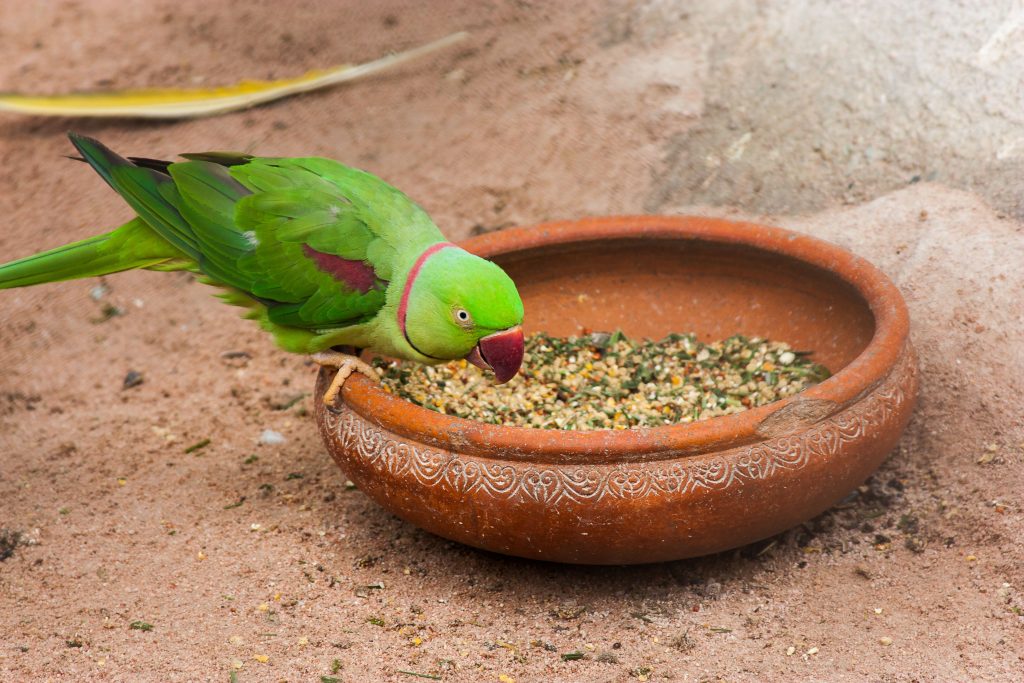
Seed mixes are everywhere in pet stores. The problem? Parrots pick favorites. They will eat all the sunflower seeds and safflower seeds first, leaving the rest behind. The result? Too much fat, not enough vitamins, calcium, and protein.
Long-term seed-only diets cause:
- Vitamin A deficiency — respiratory issues and poor feather quality
- Calcium deficiency — weak bones and egg-binding in females
- Obesity — sunflower seeds are packed with fat
- Liver disease — high-fat diets are brutal on their liver
The fix: seeds should be a small part of the diet — no more than 20 percent. Not the whole thing.
Pellets — A Balanced Foundation
The current consensus in avian nutrition is: pellets should be the base of your parrot’s diet.
Pellets are formulated to be nutritionally complete. Every piece has the same vitamins, minerals, and protein — and they cannot pick out their favorites because every piece is identical.
Not all pellets are the same. Check the ingredients — natural colors are better than artificial ones. Avoid artificial preservatives like BHA, BHT, and ethoxyquin.
Switching takes patience. Parrots that are used to seeds may not recognize pellets as food at first. Mix a few pellets into their seeds, then gradually increase the ratio. Some birds take weeks or even months to switch over.
Fresh Veggies and Fruits — Every Single Day
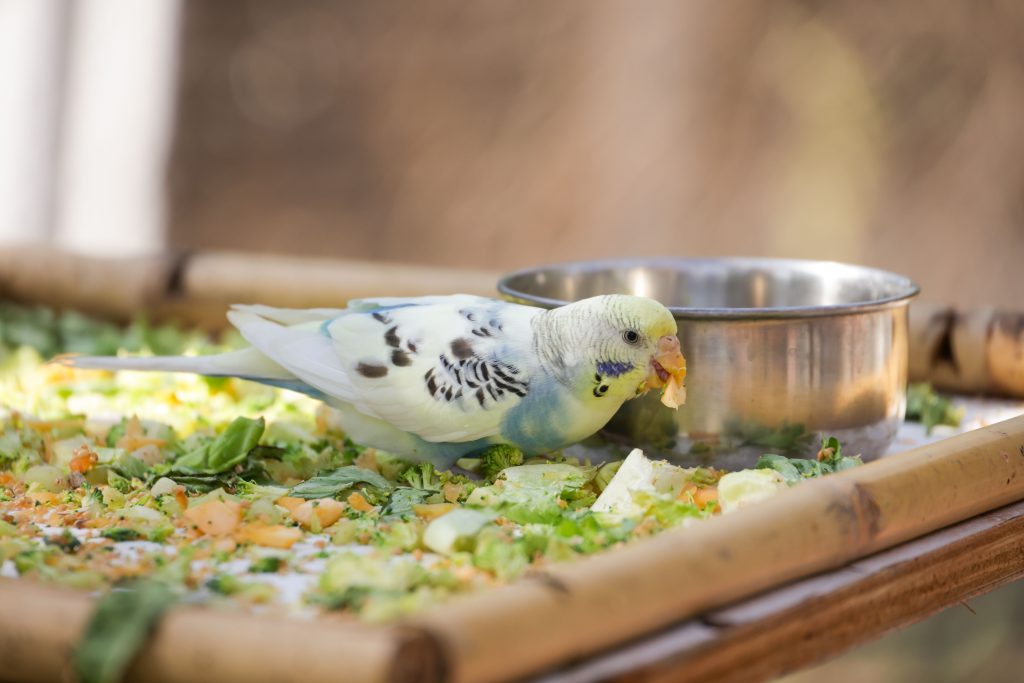
Parrots need fresh food. Vegetables and fruits provide moisture, vitamins, and phytonutrients that seeds and pellets do not have.
Vegetables should make up about 20 to 30 percent of daily food. Go for dark leafy greens and bright orange ones.
Safe veggie list:
- Kale, Swiss chard, spinach
- Carrots — shredded or chopped
- Broccoli
- Bell peppers — red and green
- Peas
- Corn — moderate
- Pumpkin
Fruits — 2 to 3 times a week:
- Apple — seeds removed
- Blueberries
- Mango
- Papaya
- Berries
Never give: avocado — it is highly toxic to parrots. Also keep apple seeds and cherry pits away — they contain cyanide compounds.
Also avoid onion, garlic, mushrooms, and raw beans — all toxic or hard to digest.
What About Meat?
Parrots in the wild are not strict vegetarians — some species eat insects and larvae for extra protein. But not all parrots need meat.
Occasional, small amounts — cooked, unseasoned:
- Hard-boiled egg — crushed with the shell for extra calcium
- Plain cooked chicken breast — tiny bits
Not recommended as a regular thing — their protein needs can be met through cooked beans and the protein already in their pellets.
Nuts — Good Fat, but Watch the Portion
Nuts are excellent sources of healthy fats and vitamin E. But they are calorie-dense — too many and your parrot packs on weight.
Daily amount: a small piece of walnut, one almond, or one hazelnut per bird, adjusted to size — a Macaw can have a bit more, a Budgie needs very little.
Only give raw or dry-roasted unsalted nuts. No salted, spiced, or smoked ones.
Fresh Water — Do Not Skip This
Water seems simple. But mess it up and you cause problems.
Change the water daily. Food debris, droppings, and dust get in the bowl fast. In one day, bacteria multiply. If you use a water bottle, scrub the nozzle and tube every day — algae and gunk build up there quickly.
Do not add vitamins or supplements to the water unless a vet tells you to. Things grow faster in water that has stuff dissolved in it. And if the water tastes off, your parrot might drink less.
How You Serve Food Affects How Much They Eat
In the wild, parrots spend hours foraging. If you just dump everything in one bowl, they lose that mental stimulation.
Try this:
- Put some dry food in foraging toys — let them work for it
- Clip veggies to different spots on the cage — not all in one bowl
- Use different bowls or feeders to add variety
This is not just feeding — it is entertainment and mental exercise too.
Different Parrots Have Different Needs
The basic principle is the same across parrots — pellets as the base + fresh veggies + limited seeds and nuts. But amounts vary by size.
Budgies and small parrots (Cockatiels, Lovebirds): Pellets are the base, seeds are minimal. Small parrots pack on weight easily from fatty seeds, so keep sunflower and hemp seeds low.
Medium parrots (African Greys, Amazons, Eclectus): Pay extra attention to calcium and vitamin A. Pellet quality directly affects feather condition and immunity.
Macaws: Larger birds eat more, so fresh veggie portions can be bigger. But they are also prone to liver issues from high-fat diets, so seeds and nuts must be strictly limited.
Final Thoughts
Feeding a parrot is a bit more complicated than you might think — but not that hard. Rotate different vegetables, cut back on seeds, use pellets as the main food, and change the water every day. Get these right, and most nutrition problems never show up.
After I switched to pellets and fresh vegetables, my parrot’s feathers came back glossy and his energy came back too. The vet said: “See? When they eat right, they show it.”
If you do one thing today, cut the seed portion in your parrot’s bowl in half and replace it with pellets. They might not eat it right away, but that is where the change starts.